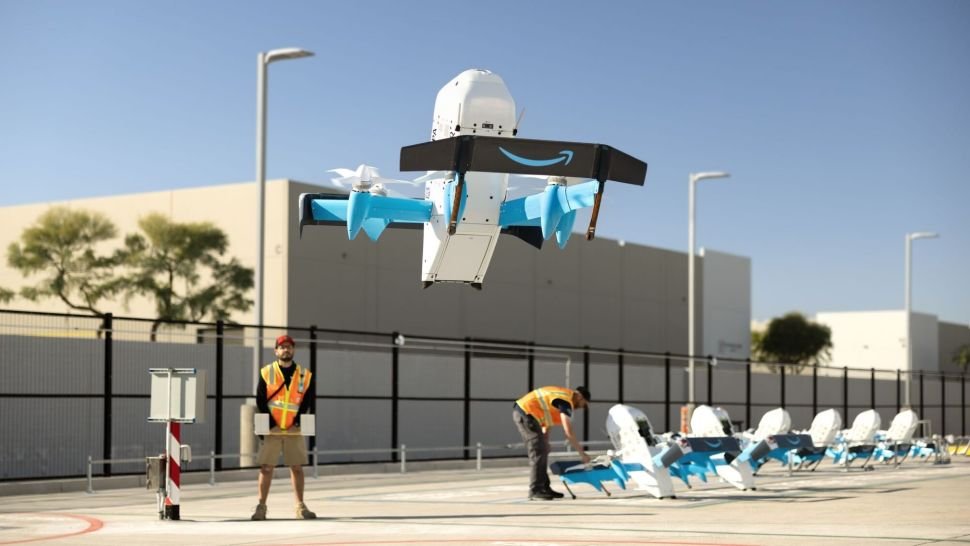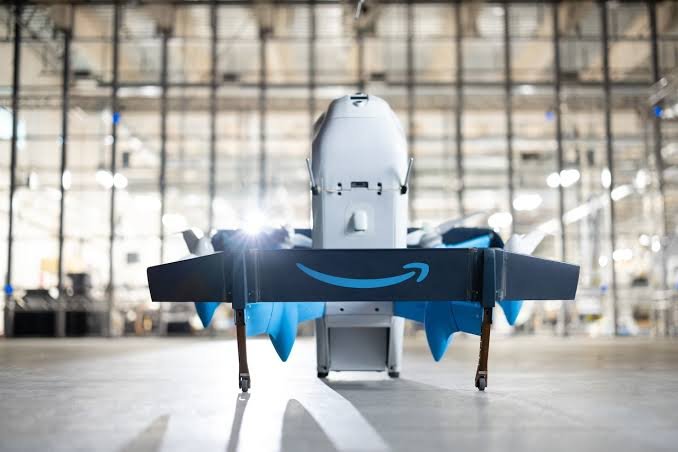
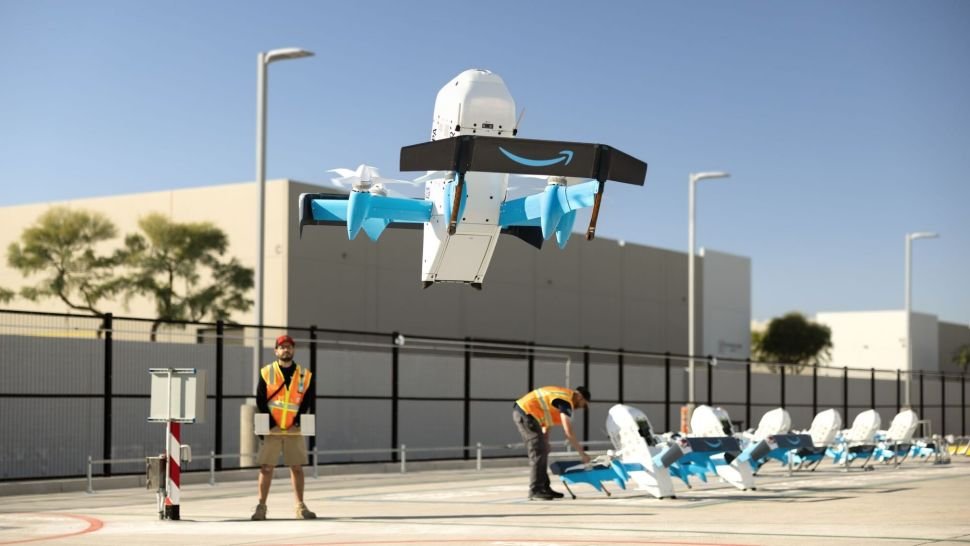
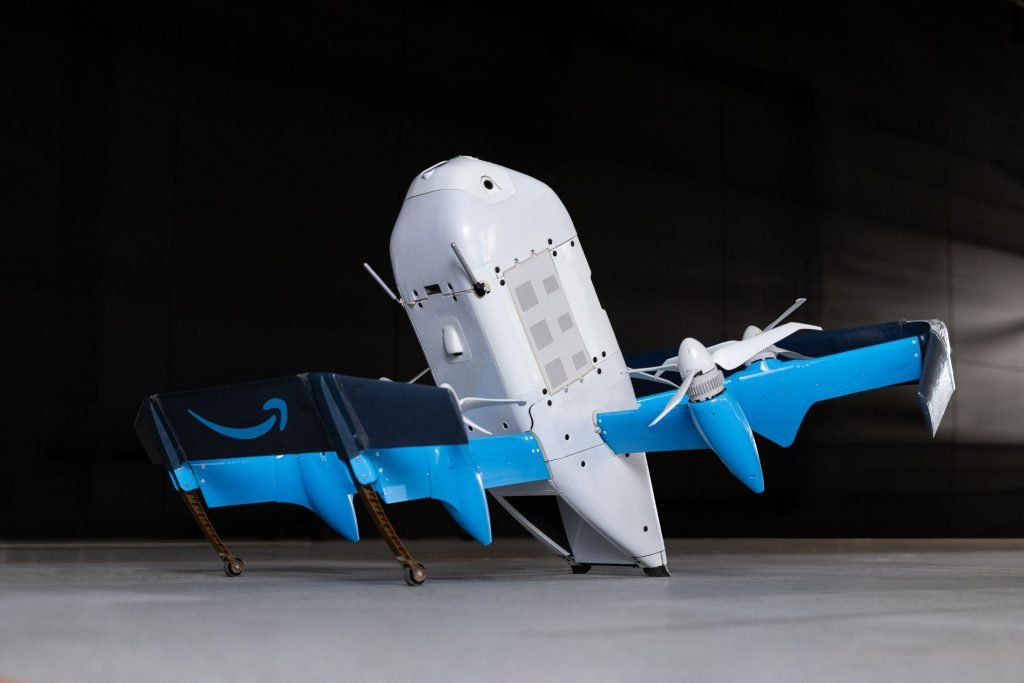
Amazon is about to make 30-minute drone delivery available to tens of millions more customers. The company confirmed this week that Prime Air will expand into nearly 500 US cities and towns by the end of 2026 — a sixfold jump from its current footprint — as it races Walmart, DoorDash, and Uber into the sky.
Why It Matters
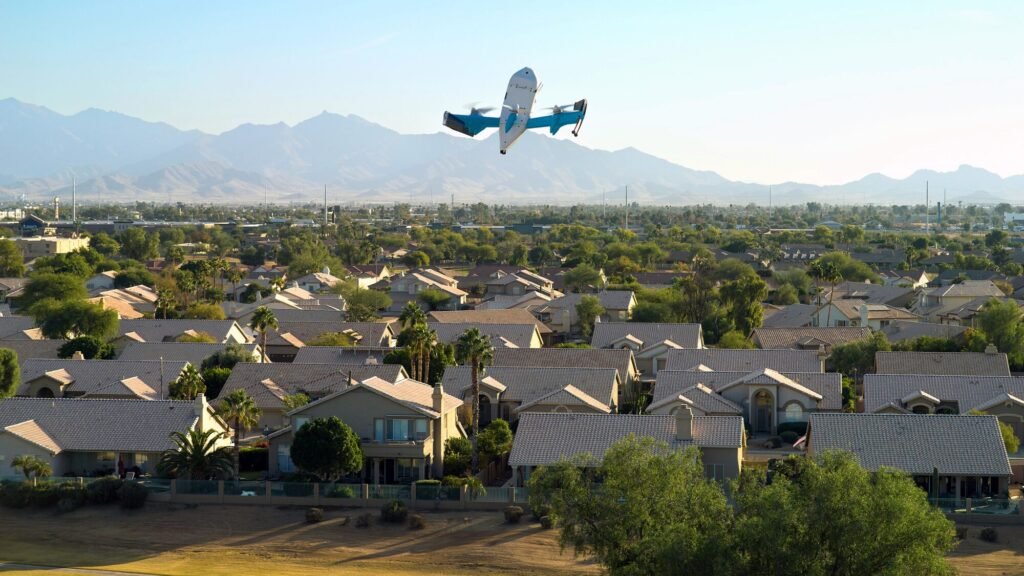
This isn’t a pilot program anymore it’s Amazon scaling drone delivery into ordinary suburbs, not just flagship test markets. If you’re in the US, there’s a real chance Prime Air lands near you before the year is out. And it’s not just an American story: Amazon has already launched the service in Darlington, UK its first market outside the US putting UK and, potentially soon, Australian readers on notice that this technology is heading global.
The Details
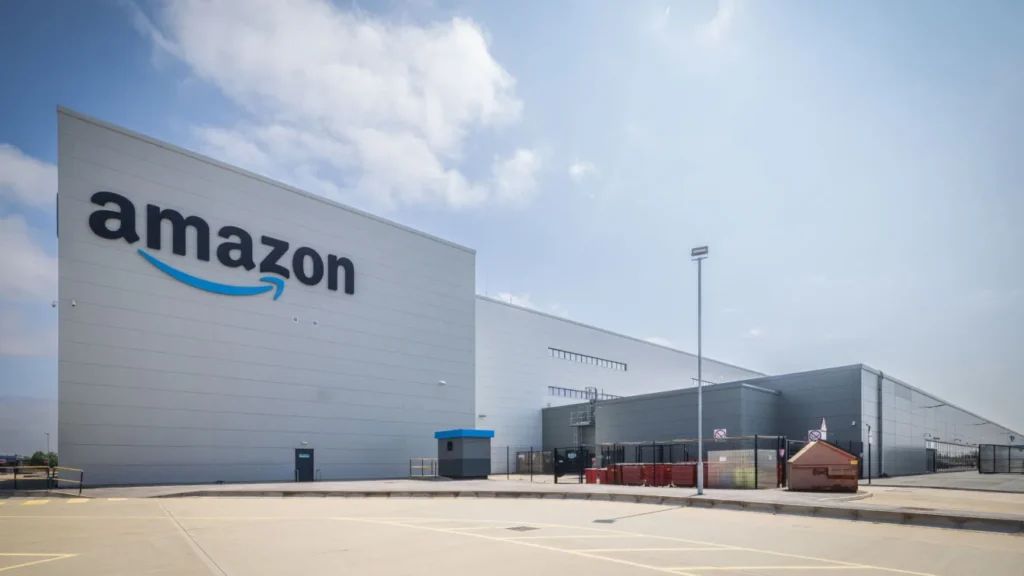
Amazon’s Prime Air service is set to grow from its current footprint to reach nearly 500 cities and towns across the United States by the end of 2026, a sixfold increase that would bring drone delivery within reach of tens of millions of customers. That’s up from just 11 active delivery locations today, with the company saying it has already completed hundreds of thousands of drone deliveries this year, with thousands more happening daily at its highest-volume sites.
Geographically, the rollout is broadening fast. Prime Air currently operates across seven states — Arizona, Florida, Kansas, Louisiana, Michigan, Nebraska, and Texas — with Chicago, Syracuse, Cleveland, Atlanta, and Boise metro areas next in line, alongside further launches planned in Georgia, Ohio, and Illinois. Eleven new locations were named specifically, including Tolleson, Arizona; Ruskin, Florida; Kansas City, Kansas; Papillion, Nebraska; Baton Rouge, Louisiana; two sites in Michigan; and four Texas cities including San Antonio and Waco.
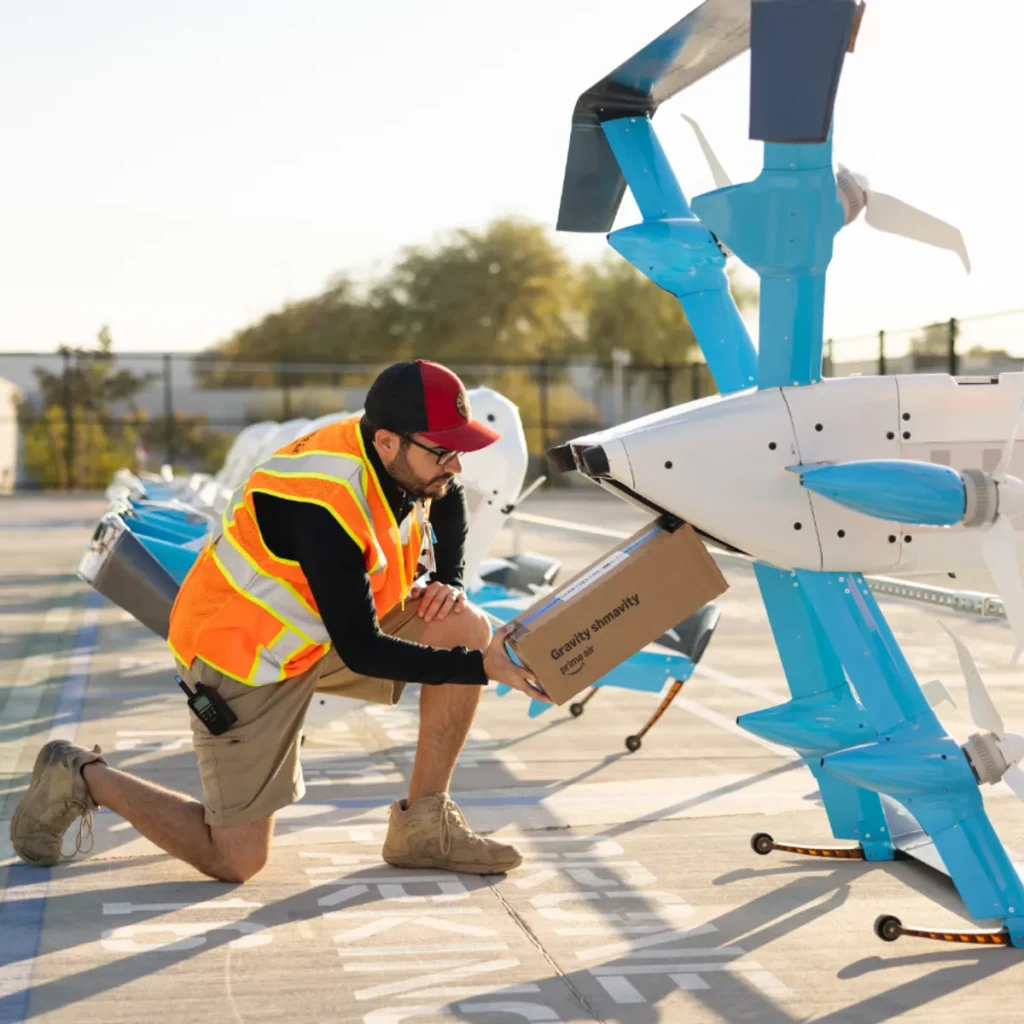
What can actually go in the box? Amazon says its drones can carry nearly any item weighing 5 pounds or less that fits inside a large shoebox — everything from groceries and electronics to cosmetics, medications, and household goods. Delivery works within a 7.5-mile radius of a fulfillment center, dropping the parcel from a safe height using cushioned packaging designed to protect the contents.
Amazon VP David Carbon framed the push as a natural extension of its existing logistics network, paraphrasing that Prime Air simply gives customers who already rely on Amazon for fast delivery an even quicker option when they need it, layered on top of the pricing and selection they already expect.
What This Means for the Race to Fastest-Mile Delivery
The real story here is competitive pressure, not just Amazon’s ambition. Alphabet’s Wing has already surpassed 1 million commercial deliveries and operates in 20 US markets, while Zipline has logged 2 million deliveries across four continents. Walmart has been expanding through partnerships with both Wing and Zipline, DoorDash recently won federal approval to run its own commercial drone network, and Uber just announced its own tie-up with Zipline — meaning nearly every major US retailer and delivery platform is now placing a bet on aerial last-mile logistics simultaneously.
That urgency is a signal worth reading into: same- and next-day shipping has become table stakes, and 30-minute delivery is emerging as the next differentiator retailers think they need to keep customers from defecting to a faster rival. But scaling this fast brings real safety scrutiny. Amazon’s program has already faced regulatory challenges — a pair of drones struck a crane in Tolleson, Arizona last October, triggering inquiries from both the National Transportation Safety Board and the FAA, and a separate FAA probe opened after a drone severed an internet cable in Waco, Texas. The UK’s Air Accidents Investigation Branch also opened its own inquiry after a Prime Air drone crashed in Darlington, England. Amazon’s willingness to relaunch in Tolleson despite the crane incident suggests confidence in its fixes, but it’s also a preview of the friction this expansion will keep generating as it touches more communities and more local airspace.
What’s Next
Watch for launches in the newly announced metro areas — Chicago, Atlanta, Cleveland, Syracuse, and Boise — through the remainder of 2026, alongside further expansion into Georgia, Ohio, Illinois, Idaho, and New York. Amazon’s Memphis, Tennessee launch has already slipped past its original June target amid local government safety coordination, a reminder that the “nearly 500 cities” figure is a target, not a guarantee, and individual market timelines could shift. Longer term, keep an eye on the FAA’s ongoing investigations, since their outcomes could shape how fast — and how far — Amazon (and its rivals) are allowed to scale.
FAQ
How fast is Amazon drone delivery? Amazon says Prime Air can deliver eligible items in as fast as 30 minutes from order to doorstep, for customers located within roughly 7.5 miles of a Prime Air-equipped fulfillment center.
What can you order with Prime Air? Items weighing 5 pounds or less that fit inside a box roughly the size of a large shoebox — including groceries, electronics, cosmetics, medications, and household products.
Is Amazon drone delivery available outside the US? Yes. Amazon launched Prime Air in Darlington, England in 2026, its first market outside the United States, though the service remains far more limited internationally than in the US for now.