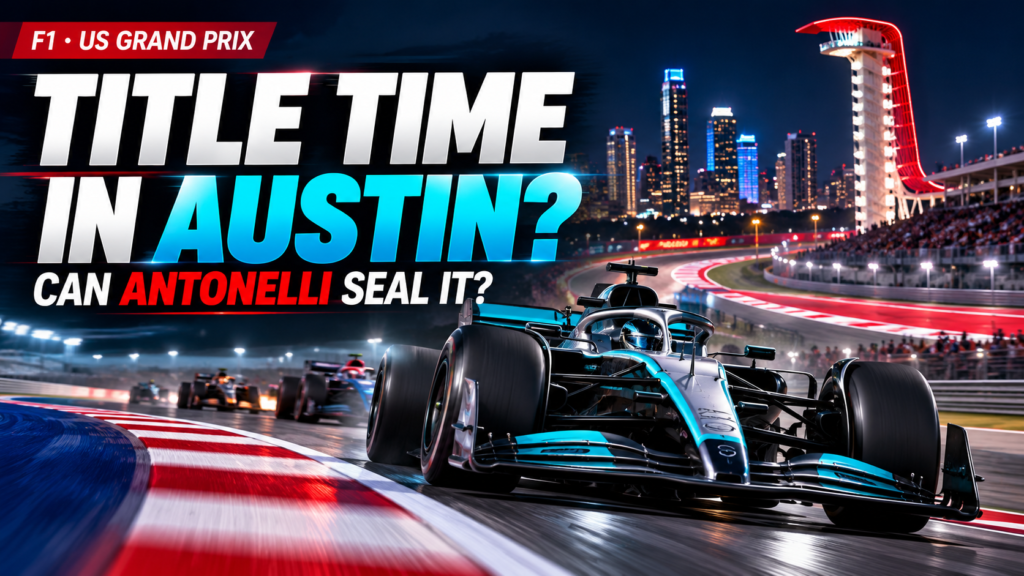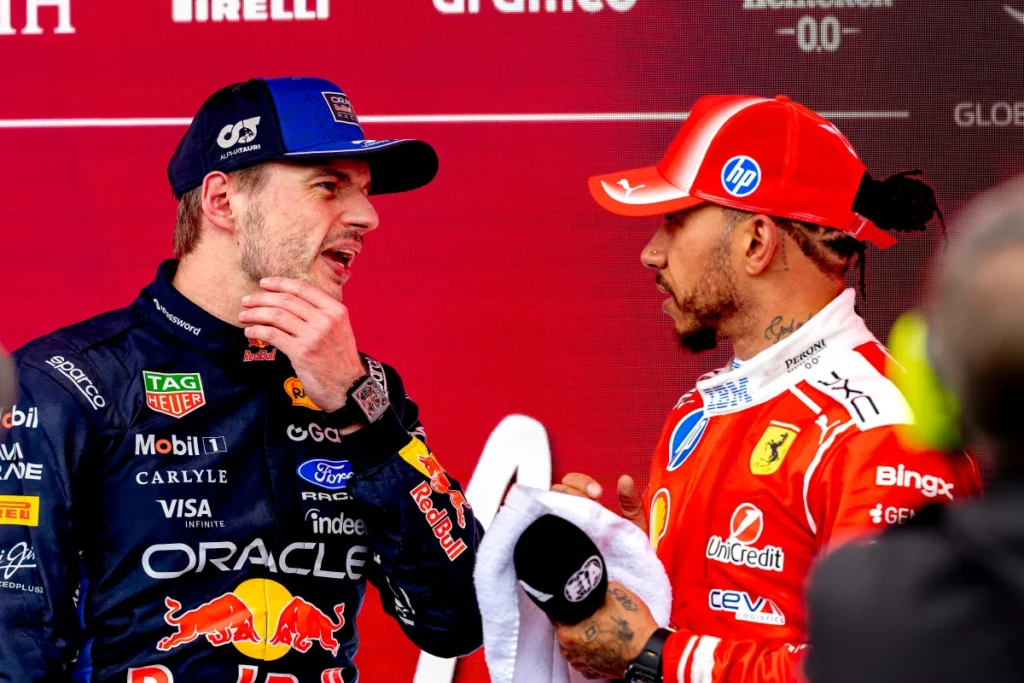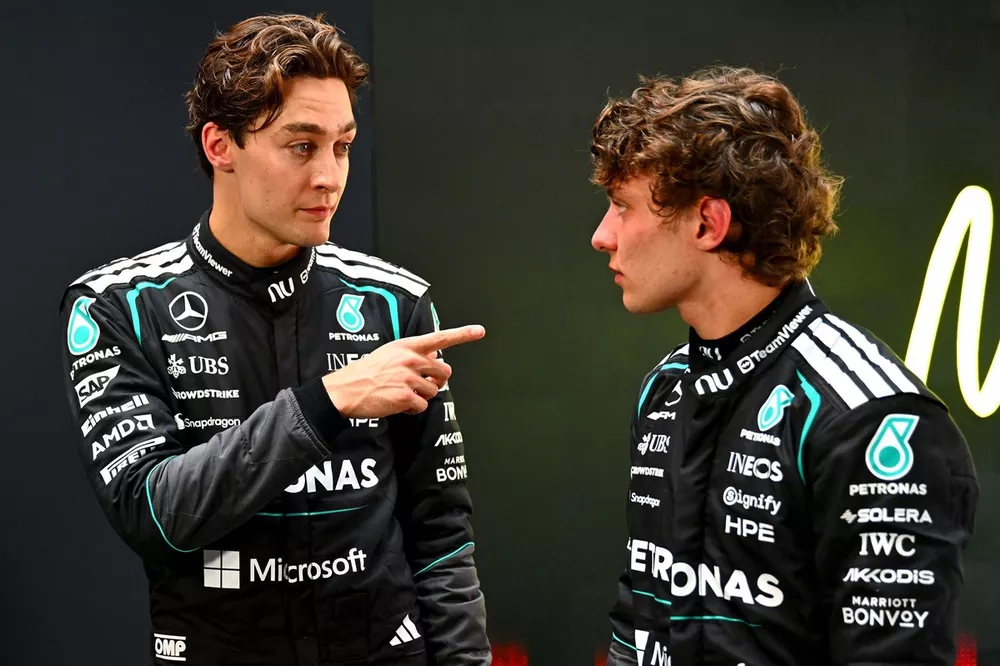
Kimi Antonelli walked into 2026 as bookmakers’ fifth favourite for the title. Twelve rounds later, the 19-year-old Mercedes rookie leads the Formula 1 World Championship by 59 points and has become the youngest driver in the sport’s history to top the standings — even as Lando Norris and Ferrari start closing the gap coming out of the summer break.

Why It Matters
This is one of the most unexpected storylines in F1 in years, and it’s resonating well beyond the usual fanbase. For US audiences still riding the Drive to Survive-fueled F1 boom, a teenage underdog beating preseason odds is an easy entry point. For UK and Australian fans steeped in the sport’s history, Antonelli breaking records that have stood for decades — and doing it as a rookie-adjacent driver in only his second F1 season — is the kind of story that redefines what’s possible for young talent in the sport.
The Details
Antonelli moved into the championship lead for the first time in his career after winning the Japanese Grand Prix in March, becoming the youngest World Drivers’ Championship leader in F1 history at 19 years and 216 days, taking advantage of a mid-race safety car to leapfrog the field after a poor start from pole, and building on the first Grand Prix win of his career two weeks earlier in China. He also became the first Italian driver to lead the standings since Giancarlo Fisichella in 2005.
The rise up the betting markets tells its own story. Bookmakers had Antonelli as just the fifth favourite for the title over the winter, before he won in China to become only the second teenager in F1 history to win a race, and then a second consecutive win in Japan cut his championship odds from 9/2 to 11/10.
By the summer break, the numbers had become historic. Eleven rounds into the season, Antonelli led the drivers’ championship on 219 points, having taken six wins and six poles across those rounds — accounting for 198 of his total points, with the rest coming from four sprint races. He led the championship by 50 points over Lewis Hamilton and 59 over his own Mercedes teammate, George Russell, heading into the break. Two zero-score Grand Prix weekends, at Barcelona and Britain, were the only blemishes on the record — both traced to mechanical failures rather than driving mistakes, a distinction Antonelli’s camp has been keen to stress.
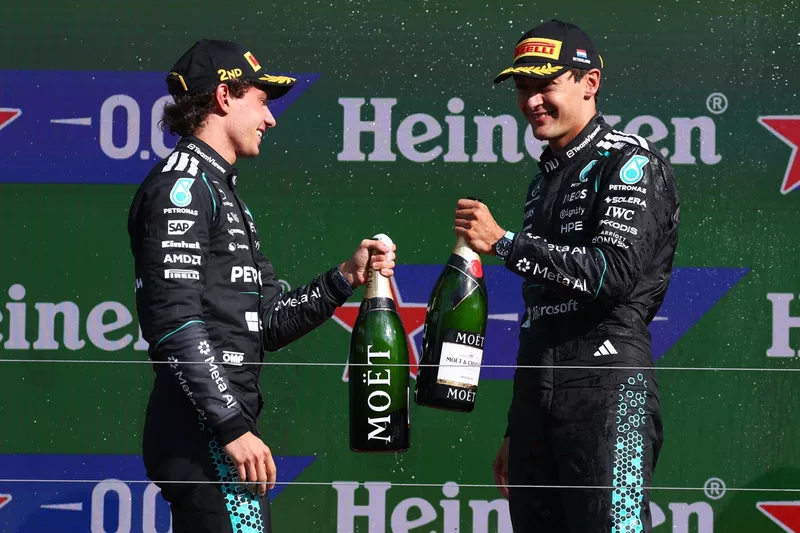
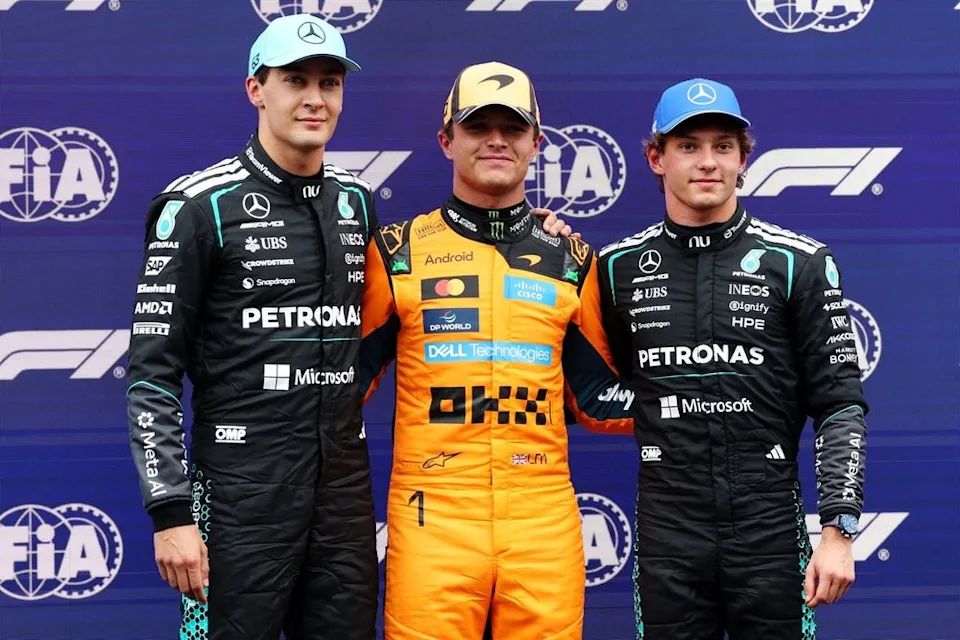
Since the break, the picture has gotten more interesting. At the Dutch Grand Prix — the final running of the race at Zandvoort before it drops off the calendar — Lando Norris won for the second consecutive weekend, with Antonelli second and Russell third. The result lifted Antonelli to 242 points for a 59-point lead, with Russell and Hamilton now tied on 183 points apiece, Russell holding second place on countback due to having two wins to Hamilton’s one. Norris, meanwhile, has now moved ahead of Charles Leclerc into fourth place with 159 points, and has picked up 56 points across the Hungarian and Dutch weekends alone, including two straight Grand Prix wins — putting him 83 points behind Antonelli with, by his own team’s admission, a still-mathematical shot at a second world title.
What This Means for the Title Fight
The headline number — a 59-point lead — sounds commanding, and in a vacuum it is. But the more useful way to read this championship isn’t the gap to Antonelli, it’s the shape of the season so far: Antonelli has been nearly flawless on raw pace, but his two zero-point weekends prove the margin for error in a 24-race season is thinner than a big early lead suggests. Both blank rounds came from mechanical issues completely outside his control, which is either reassuring (his driving hasn’t been the problem) or unsettling (Mercedes’ reliability, not Ferrari or McLaren, may be his biggest threat) depending on how you look at it.
Norris’s back-to-back wins heading out of the break are the real subplot to watch. McLaren’s Hungary upgrade appears to have unlocked genuine race-winning pace for the first time all season, and if that form holds, the second half of the year could look very different from the first — not because Antonelli is fading, but because the competitive order behind him is reshuffling fast. A rookie building a 59-point cushion against a stagnant field is one story; a rookie defending that cushion against a resurgent reigning champion is a different, much tighter one.
What’s Next
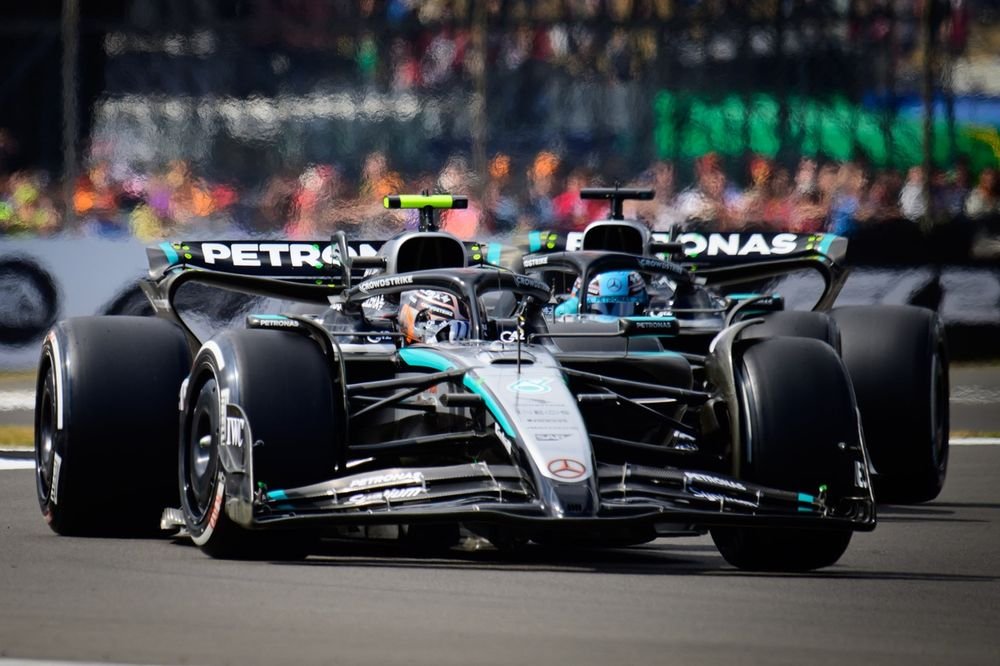
Watch how Mercedes handles internal team dynamics between Antonelli and Russell, especially after the Dutch GP saw a team order benefit Antonelli when the pair scored identical points — a decision that could resurface if Russell’s title math ever gets close enough to matter. Also worth tracking: whether McLaren’s Hungary-Dutch form was a genuine step forward or a two-race high, and whether Ferrari can find similar gains to keep Hamilton and Leclerc in the conversation. With 12 rounds down and roughly a dozen left, Antonelli remains the clear favourite, but the margin for a late-season stumble is narrowing race by race.
FAQ
- How many points does Kimi Antonelli lead the 2026 F1 championship by?
As of the Dutch Grand Prix in August 2026, Antonelli leads with 242 points, a 59-point advantage over both George Russell and Lewis Hamilton, who are tied for second on 183 points each.
- Is Kimi Antonelli the youngest F1 championship leader ever?
Yes. He became the youngest driver in Formula 1 history to lead the World Drivers’ Championship standings after winning the Japanese Grand Prix in March 2026, at 19 years and 216 days old, breaking the previous record by almost three years.
- Can Lando Norris still catch Antonelli for the 2026 title?
Mathematically, yes — Norris trails by 83 points with roughly a third of the season remaining, following back-to-back wins in Hungary and the Netherlands. It’s a difficult gap to close but not an impossible one if Antonelli’s form dips or Mercedes suffers further reliability issues.