The Federal Reserve has just done something markets have not seen in three years: it raised interest rates.
On September 16, the Fed lifted its benchmark interest-rate range by 25 basis points to 3.75%–4.00%, marking its first rate increase since 2023.
But the bigger surprise wasn’t the size of the move. It was the message behind it.
The Fed signalled that another rate increase could come before the end of 2026, with 16 of the 18 policymakers seeing at least one additional hike this year.
Normally, that would be a major warning sign for stocks.
Yet markets have remained remarkably resilient.
That creates a bigger question for investors: why aren’t stocks falling harder when interest rates are moving higher?
Why It Matters
Interest rates influence almost everything in the economy.
Higher rates make borrowing more expensive for businesses and consumers. They can reduce demand for mortgages, cars and corporate investment while increasing the return investors can earn from relatively safer assets such as government bonds.
The problem for the Fed is that inflation is still proving difficult to eliminate.
At the same time, the global economy is dealing with another problem: oil.
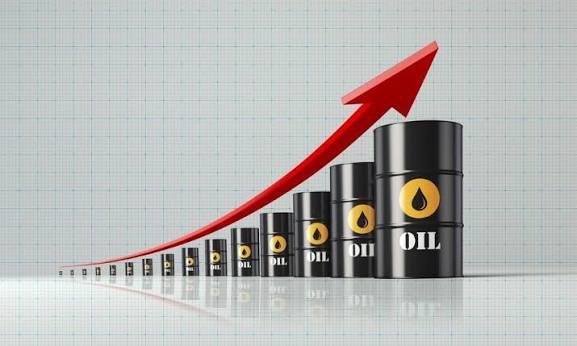
Brent crude has been trading above $100 a barrel, while U.S. WTI recently settled at around $100.30.
That creates a difficult combination:
Higher oil prices → higher inflation → higher interest rates → slower economic growth.
This is exactly the kind of environment markets don’t usually like.
The Details
The Fed’s September decision was a quarter-point increase, taking the policy range from 3.50%–3.75% to 3.75%–4.00%.
But investors are paying more attention to what comes next.
The fact that 16 of 18 policymakers see another hike this year suggests the Fed believes inflation risks remain significant enough to justify keeping monetary policy restrictive.
That is particularly important because markets had spent much of the previous period expecting rates to eventually move lower.
Now the narrative has changed.
The question is no longer simply whether the Fed can cut rates.
It is whether the Fed may have to keep rates high for longer — or even raise them again.
Oil Makes the Fed’s Job Harder
The renewed oil shock is one of the biggest complications.
Brent crude settled at $104.87 a barrel on September 18, while WTI finished at $100.30.
Oil at $100 is not automatically an economic disaster. The problem is what happens if prices remain there for an extended period.
Energy costs affect transportation, manufacturing, chemicals, aviation, logistics and eventually consumer prices.
That means an oil shock can make inflation harder to control even when economic growth is slowing.
This creates a classic policy dilemma.
The Fed can raise rates to fight inflation, but doing so can also weaken economic growth.
Why Haven’t Stocks Collapsed?
There are several reasons.
First, the U.S. economy remains more resilient than many investors expected.
Second, the enormous investment cycle around artificial intelligence is providing a major source of corporate spending.
Companies are investing billions in data centers, chips, cloud infrastructure and AI software.
That spending is supporting parts of the economy even as monetary policy becomes tighter.
Third, investors may already have priced in the possibility of higher rates.
Markets move based on expectations, not simply on the headline number.
If investors expected the Fed to eventually become more hawkish, the actual rate hike may not be enough to trigger a major sell-off.
The Bigger Risk: Stagflation
The combination of higher oil prices and higher interest rates creates another word investors are watching:
stagflation.
Stagflation happens when inflation remains elevated while economic growth weakens.
It is one of the most uncomfortable environments for policymakers because the usual solutions conflict with each other.
Raise rates and you risk hurting growth.
Cut rates and you risk allowing inflation to remain elevated.
The current environment is not necessarily a repeat of the 1970s, but the combination of energy disruption, inflation pressure and higher borrowing costs explains why markets are becoming more sensitive to oil prices.
What This Means for Investors
The most important number for markets may no longer be the Fed’s next decision itself.
It may be inflation.
If oil prices fall back toward normal levels, the pressure on the Fed could ease.
If oil stays above $100 for months, inflation could prove much harder to control.
That would make another Fed hike more likely and could keep bond yields elevated.
For technology companies and other high-growth businesses, that matters because higher interest rates generally make future earnings less valuable when discounted back to today’s prices.
In other words, the biggest risk to markets may not be one additional 25-basis-point hike.
It may be a world where rates stay high because inflation refuses to disappear.
What’s Next?
Markets will now focus on three things:
- Oil prices — particularly whether Brent remains above $100.
- U.S. inflation data — evidence that price pressures are accelerating or cooling.
- The Fed’s next communication — whether policymakers continue signalling another hike.
If oil falls and inflation cools, the Fed could eventually regain room to ease policy.
If oil remains elevated and inflation stays sticky, investors may have to adjust to a much longer period of high interest rates.
That is the real story behind the September Fed decision.
The rate hike itself was only 25 basis points.
The bigger question is whether it marks the beginning of a new phase in which inflation forces central banks to stay restrictive for longer than markets had hoped.
FAQ
Did the Fed raise interest rates in September 2026?
Yes. The Federal Reserve raised its benchmark interest-rate range by 25 basis points to 3.75%–4.00% on September 16, 2026.
Is the Fed expected to raise rates again?
Sixteen of the 18 Fed policymakers indicated that they expect at least one additional rate increase before the end of 2026.
Why are oil prices important for interest rates?
Higher oil prices can increase inflation by raising transportation, manufacturing and energy costs. Persistent inflation can make it harder for the Fed to reduce interest rates.
Why haven’t stocks fallen sharply after the Fed hike?
Markets had already been anticipating a more restrictive Fed. The U.S. economy has also remained resilient, while AI-related investment continues to support corporate spending.
What is stagflation?
Stagflation describes an environment where inflation remains high while economic growth slows. It can make monetary policy particularly difficult because fighting inflation can further weaken growth.