Apple’s next major iPhone software update could be more important than a typical annual release. While iOS 27 is bringing Apple’s next generation of artificial intelligence features to supported devices, early reporting suggests that iOS 28 could be a more significant milestone—potentially arriving alongside a redesigned iPhone marking 20 years since the original device transformed the smartphone industry.
For iPhone users in the United States and around the world, that raises several questions. Will Apple focus on artificial intelligence, battery life, privacy and performance? Could the iPhone interface receive a more substantial redesign? And will the software take advantage of new hardware expected in Apple’s anniversary-era iPhone?
There is plenty of room for speculation, but separating credible reporting from wishful thinking is essential.
As of October 18, 2026, Apple has not officially announced iOS 28, confirmed its features or published a release date. The following analysis looks at what has been reported, what Apple’s current software direction suggests, and what users should realistically expect.
What Is iOS 28?
iOS 28 is the expected successor to iOS 27, Apple’s current-generation iPhone operating system.
Apple typically previews major iOS updates at its Worldwide Developers Conference, releases developer and public beta versions during the summer, and makes the finished software available around the launch of its autumn iPhone lineup.
If Apple follows its usual schedule, iOS 28 could be previewed at WWDC in June 2027, followed by a beta-testing period and a wider release in September 2027.
However, this is a projection based on Apple’s historical release pattern—not an official schedule.
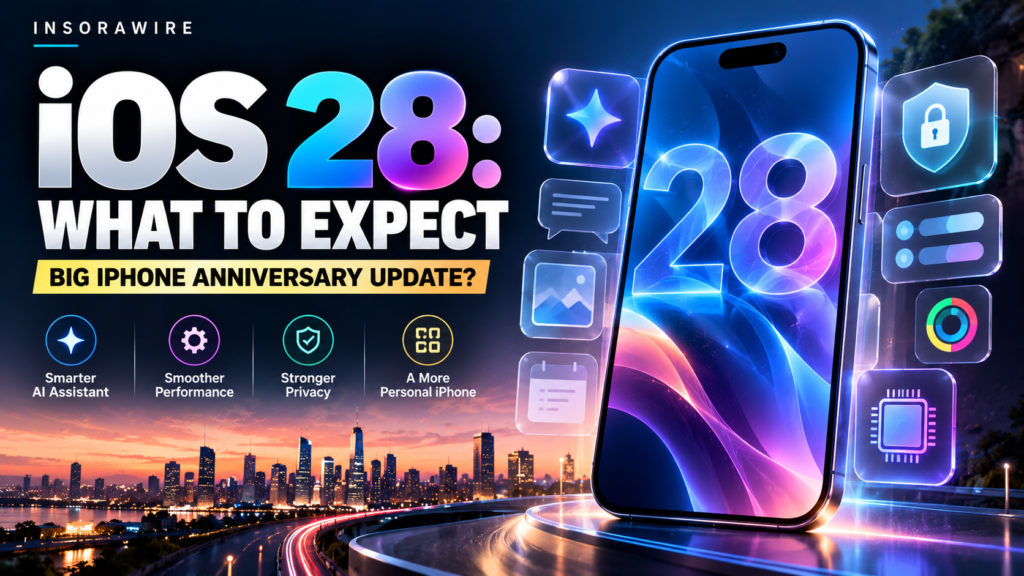
The bigger question is what Apple intends to achieve with the update. Early reporting suggests that iOS 28 could be more substantial than iOS 27, which has focused on Apple’s next-generation Siri and broader Apple Intelligence capabilities.
According to MacRumors, Bloomberg’s Mark Gurman reported in late May 2026 that Apple’s 2027 software releases were shaping up to be significantly more ambitious than the preceding generation.
Source: MacRumors — iOS 28 Will Reportedly Be ‘Far More Significant’ Than iOS 27.
That is an early indication of Apple’s development priorities, not confirmation of particular features.
Why iOS 28 Could Be a Major Release
There is a historical reason why the next major iOS release is attracting attention.
Apple introduced the original iPhone in 2007. The year 2027 marks the device’s 20th anniversary, creating an opportunity for Apple to introduce a significant hardware and software milestone.
Apple has not confirmed that iOS 28 will be a special anniversary edition. Nevertheless, the timing gives the company an incentive to make the next generation feel meaningfully different.
Three developments could shape the release.
1. A closer connection between software and hardware
Apple designs its operating systems, processors and devices to work together. A new iPhone generation can therefore create opportunities for software capabilities that are difficult to deliver on older hardware.
If the next anniversary-era iPhone introduces a substantially different design, iOS 28 may need interface adjustments to accommodate it.
That does not automatically mean older iPhones will receive fewer features. The final compatibility list and feature requirements will depend on Apple’s official announcement.
2. More capable Apple Intelligence features
Apple has already been moving AI deeper into its operating systems. iOS 27 introduced a significantly upgraded Siri and additional Apple Intelligence capabilities.
A logical next step would be to make these tools more reliable, context-aware and useful across applications.
However, it is too early to say exactly which new AI features iOS 28 will include. Apple has not published an official feature list.
3. A more refined everyday experience
Major software releases do not always need dramatic visual changes to make a difference.
Improvements to responsiveness, background processing, battery management, notifications and application reliability can affect how people experience their phones every day.
If Apple is preparing a major hardware milestone, it may also use the accompanying software to refine the overall experience.
These are reasonable possibilities, not confirmed iOS 28 features.
iOS 28 and the 20th-Anniversary iPhone: What Is Being Reported?
One of the biggest stories surrounding iOS 28 is its potential relationship with Apple’s 2027 iPhone generation.
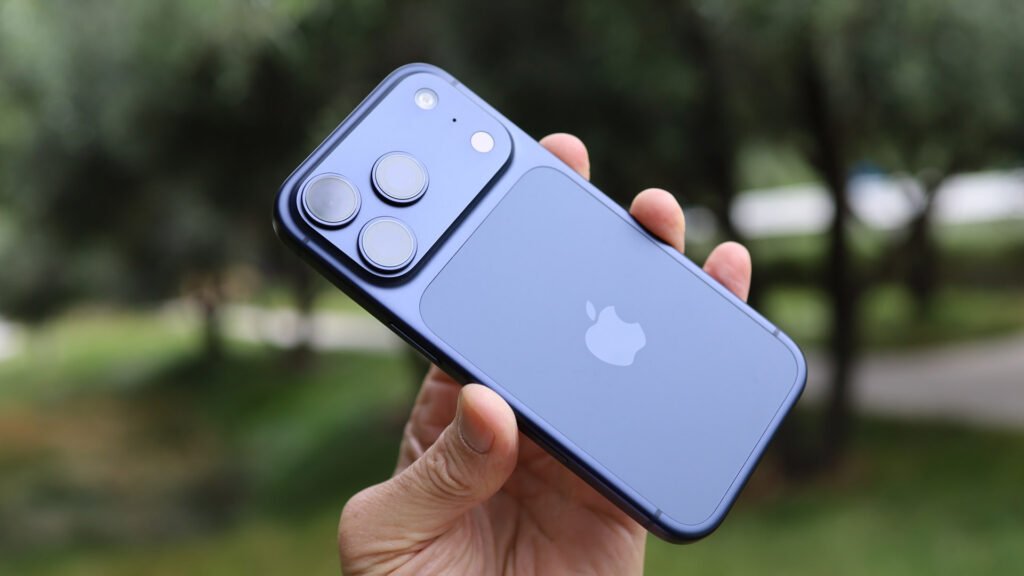
MacRumors reported that early rumours about iOS 28 were linked to a redesigned anniversary iPhone, with speculation about a more immersive display and a design that minimises visible interruptions.
The idea is compelling because Apple has repeatedly used new hardware generations to introduce changes to the way users interact with iOS.
But the details need to be treated carefully.
There is no official confirmation that Apple’s anniversary iPhone will have a completely uninterrupted display, no visible camera cutout or a particular curved-screen design. Those details remain speculative.
If Apple does pursue a more immersive display, the software could need to adapt in several ways:
- More flexible layouts for system notifications
- Better handling of status information and on-screen controls
- Interface elements that adapt to different display shapes
- Improvements to multitasking and interactive widgets
- More consistent transitions between applications and system features
These are examples of changes that a different display design could make useful. They should not be interpreted as leaked or confirmed iOS 28 features.
The central question is whether Apple will make the anniversary iPhone feel like a genuinely new generation of device—or primarily a hardware redesign supported by familiar software.
Could iOS 28 Bring a Bigger AI Upgrade?
Artificial intelligence is likely to remain an important part of Apple’s software strategy.
With iOS 27, Apple has introduced a new version of Siri designed to understand personal context, respond more naturally, interpret what is on the screen and carry out more actions across supported applications.
Apple’s September 2026 software announcement describes Siri AI as a more capable assistant that can draw on information from supported personal content and help users complete everyday tasks.
Source: Apple — Siri AI, a profoundly more capable and personal assistant is here.
That creates a foundation for future improvements, although Apple has not confirmed which capabilities will arrive in iOS 28.
What users could reasonably hope for
More reliable Siri responses. Users want an assistant that understands natural language and completes requests correctly without repeated instructions.
Better coordination across apps. A more capable assistant could help users move between supported applications to complete tasks, provided the necessary integrations and permissions are available.
More useful personal context. AI could make it easier to retrieve relevant information from messages, documents, photographs and calendars, subject to the user’s privacy settings and Apple’s implementation.
Improved on-device processing. Apple may continue expanding the tasks that compatible devices can handle locally, although the available features will depend on hardware and software requirements.
Clearer control over AI actions. As assistants become more capable, users need to know what information is being accessed and when an action requires confirmation.
These are areas worth watching rather than promises about what iOS 28 will deliver.
Why AI reliability matters more than flashy demonstrations
A personal assistant that can write a message or summarise a document is useful. An assistant that consistently understands the user’s intent and performs the correct action is considerably more valuable.
For Apple, the challenge is to make AI feel dependable enough to become part of daily routines.
If iOS 28 focuses on reliability, privacy and deeper integration rather than simply adding more AI features, that could be a meaningful improvement for users.
Will iOS 28 Have a Completely New Design?
A major visual redesign would attract attention, especially if Apple introduces a new anniversary-era iPhone.
However, there is no reliable confirmation that iOS 28 will receive a complete interface overhaul.
Apple’s software evolution has often involved a combination of visible changes and less obvious refinements. Features such as Home Screen customisation, redesigned system controls and new visual treatments can change the experience without requiring an entirely new interface.
For iOS 28, possible areas of improvement include:
- More flexible Lock Screen and Home Screen layouts
- Better integration between widgets and interactive features
- Smoother animations and transitions
- More adaptable interfaces for different screen designs
- Improvements to accessibility and readability
These are possibilities rather than confirmed features.
A dramatic redesign would also create practical challenges. Apple would need to ensure that core controls remain familiar, accessibility features continue to work well and third-party applications adapt appropriately.
For most users, a good redesign should improve usability rather than change the interface merely for the sake of novelty.
Battery Life and Performance: Could iOS 28 Make Older iPhones Better?
Battery life is one of the most important considerations when evaluating a software update.
An operating system can affect power consumption through background activity, application scheduling, wireless connectivity, display behaviour and other processes.
Apple may make improvements in these areas with future software releases, but there is no confirmed evidence that iOS 28 will deliver a specific battery-life increase.
It would be misleading to promise that the update will make every iPhone last longer.
What could improve?
Apple could refine how the operating system handles background tasks, manage system resources more efficiently and optimise performance on compatible devices.
Such improvements could benefit some users, depending on their device, battery condition and usage patterns.
But software cannot reverse the physical ageing of a lithium-ion battery. If an iPhone’s battery has significantly degraded, replacing it may have a greater effect on battery life than installing a new operating system.
Will iOS 28 make older iPhones slower?
That cannot be determined before the software is released and tested.
Performance depends on several factors, including the iPhone’s processor, memory, battery condition, storage availability and the demands of new features.
Some advanced AI capabilities may require newer hardware. That does not necessarily mean the entire operating system will be unavailable on older devices.
The sensible approach is to wait for Apple’s official compatibility list and independent performance testing before deciding whether an older iPhone should be upgraded.
iOS 28 Privacy: Will Apple Give Users More Control?
Privacy will remain a key issue as AI becomes more integrated into smartphones.
An AI assistant can become more useful when it has access to relevant context. But that same access creates questions about how personal information is processed, retained and shared.
Users should expect privacy to remain an important part of Apple’s messaging, although the specific privacy features of iOS 28 have not been announced.
Potential areas for further development include:
- More understandable permission controls
- Greater transparency about AI processing
- Clearer explanations of when information leaves the device
- Better controls over access to personal context
- More visibility into applications’ use of sensitive information
These are areas where improvements could be valuable, not confirmed iOS 28 additions.
Privacy also depends on implementation. A feature described as private is not automatically risk-free, and users should understand which information is processed locally and which services rely on remote infrastructure.
For Apple, the challenge is to make advanced AI useful without asking consumers to surrender more control than they are comfortable with.
Which iPhones Could Support iOS 28?
Apple has not announced the iPhone compatibility list for iOS 28.
It would therefore be premature to promise support for a particular model or to state that a specific generation will be excluded.
The eventual compatibility list will depend on Apple’s hardware requirements and the capabilities needed by the new operating system.
It is also possible for a device to support the main iOS update while missing certain advanced features that require newer hardware.
For example, AI features may have different processing or memory requirements from standard messaging, calling and system-interface features.
When Apple announces iOS 28, users should check two separate questions:
- Is their iPhone compatible with the operating system?
- Are the specific features they want available on that device?
These are not always the same thing.
When Will iOS 28 Be Released?
Based on Apple’s historical software schedule, iOS 28 could follow this timeline:
| Milestone | Expected timing | Status |
|---|---|---|
| WWDC preview | June 2027 | Expected based on Apple’s usual schedule; not confirmed |
| Developer beta | Around June 2027 | Not announced |
| Public beta | Summer 2027 | Not announced |
| General release | September 2027 | Projection based on previous iOS releases |
Apple has not confirmed these dates. The company could change its schedule, and individual features might arrive later than the initial software release.
The first official details should become clearer when Apple announces its 2027 developer conference and publishes its software roadmap.
Should You Wait for iOS 28 Before Buying an iPhone?
For most people, it is too early to make a purchasing decision based on iOS 28 rumours alone.
If your current phone works well, receives security updates and meets your needs, there may be little reason to upgrade simply because a future operating system is expected to be significant.
If you need a new phone now, consider the features available in current models rather than relying on unconfirmed promises about next year’s software.
Before buying, consider:
- How long the device is expected to receive software support
- Battery life and replacement costs
- Camera and display requirements
- Storage capacity
- Performance for the applications you use
- Whether the AI features you want are already available
- Total cost over the period you intend to keep the phone
Waiting may make sense for someone whose current device is still in good condition and who is particularly interested in a potential anniversary-era iPhone redesign.
But waiting also has a cost: you continue using your existing device and may miss out on features available today.
The right decision depends on your needs, budget and how much value a future design change would actually provide.
Our Take: iOS 28 Could Be Important, but Expectations Need to Stay Realistic
The early iOS 28 rumours are interesting because they point towards a potentially important moment in Apple’s product history.
A major anniversary iPhone, more capable AI and improvements to the everyday iPhone experience could combine to make the 2027 software release particularly significant.
However, the strongest claims circulating online are not all confirmed. Apple has not announced the interface design, supported devices, new AI features or release schedule for iOS 28.
The most useful approach is to focus on the areas where Apple already has a clear direction: integrating AI more deeply into its ecosystem, improving the experience across devices and maintaining its emphasis on privacy.
If iOS 28 delivers meaningful improvements in those areas, it could be valuable even without a dramatic redesign.
The real test will not be how impressive the rumours sound. It will be whether the finished software makes the iPhone more useful, more reliable and easier to live with.
For now, iOS 28 is a story worth following—but not a feature list worth treating as fact.
Frequently Asked Questions
Has Apple announced iOS 28?
No. As of October 18, 2026, Apple has not officially announced iOS 28 or published its final feature list.
When will iOS 28 be released?
If Apple follows its usual schedule, iOS 28 could be previewed in June 2027 and released to the public around September 2027. These dates are projections, not confirmed release dates.
What new features will iOS 28 have?
No features have been officially confirmed. Early reporting suggests the update could be significant, with speculation around Apple’s anniversary-era iPhone and future software capabilities. Specific AI, design and battery improvements remain unconfirmed.
Will iOS 28 introduce a completely redesigned iPhone interface?
There is no official confirmation of a complete redesign. A different interface may be useful if Apple introduces substantially new hardware, but specific design rumours should be treated cautiously.
Will iOS 28 improve Siri and Apple Intelligence?
Further improvements are plausible given Apple’s current software direction, but Apple has not announced which AI features will be included in iOS 28.
Which iPhones will get iOS 28?
Apple has not published a compatibility list. The final list will be announced closer to the software release, and some features may require newer hardware even on supported devices.
Should I wait for iOS 28 before buying an iPhone?
Only if your current phone meets your needs and you are comfortable waiting for more information. Do not buy or delay a purchase based solely on unconfirmed features.
About InsoraWire: InsoraWire covers technology, AI, markets, business, explainers and Formula 1 with clear reporting and practical analysis.
Sources
- MacRumors — iOS 28 Will Reportedly Be ‘Far More Significant’ Than iOS 27
- MacRumors — Why iOS 28 Is Already Overshadowing iOS 27
- Apple — WWDC26: Apple unveils next generation of Apple Intelligence and Siri AI
- Apple — Siri AI, a profoundly more capable and personal assistant is here
Research current to October 18, 2026. iOS 28 features, release dates and device compatibility remain unconfirmed unless explicitly identified as official Apple announcements.