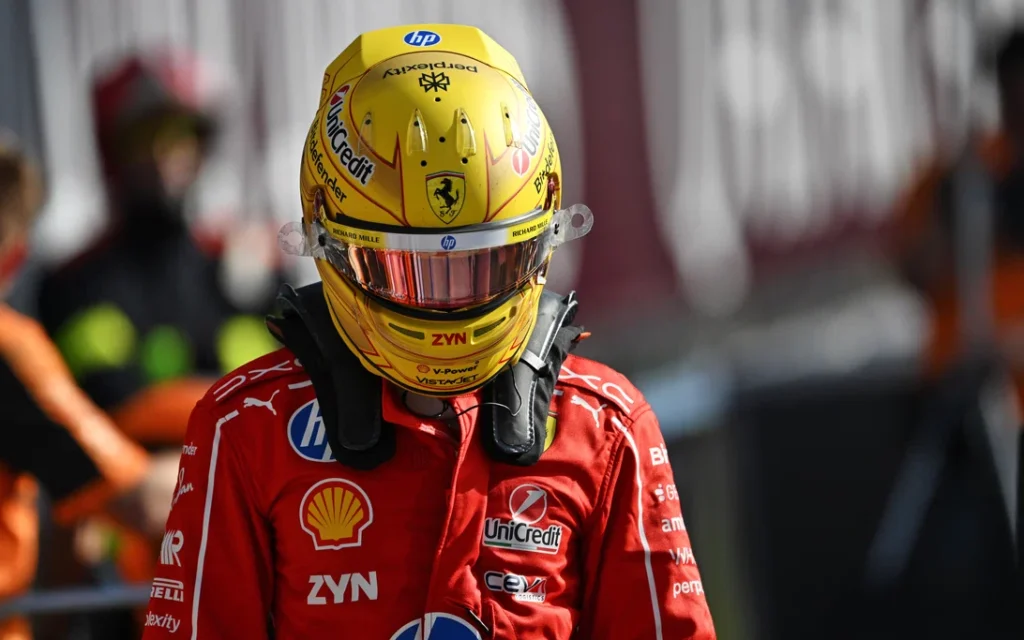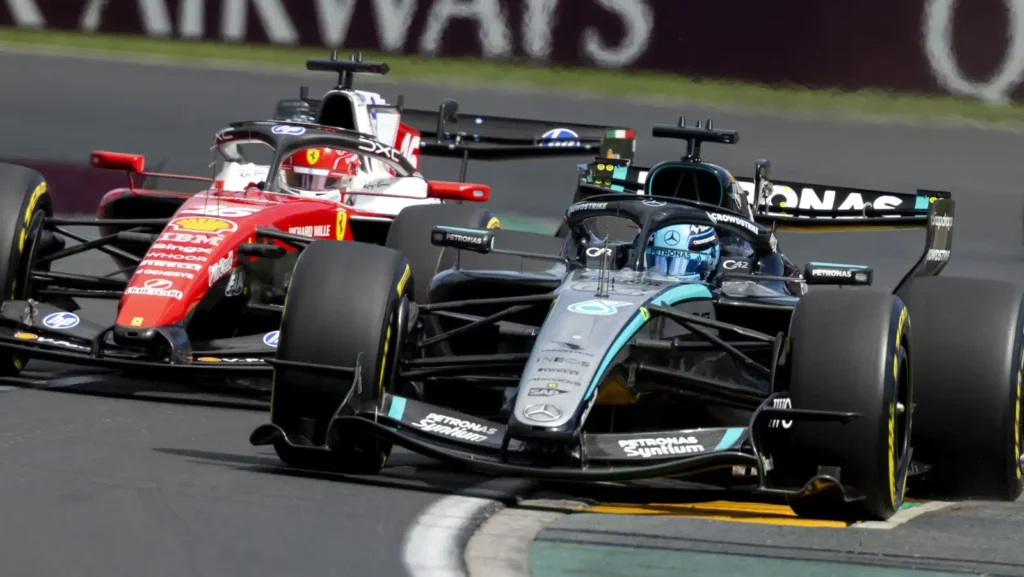
Ferrari looked firmly in control of second place in the Formula 1 constructors’ championship when the summer break arrived. The Scuderia had built an 85-point advantage over McLaren and was 127 points clear of Red Bull. But since the season resumed, the picture has started to change. McLaren has outscored Ferrari by 33 points across the three races since the break, cutting Ferrari’s advantage from 85 points to just 52. Red Bull has not made the same gains, but Ferrari’s recent lack of momentum is becoming increasingly difficult to ignore.
Why It Matters
Ferrari’s problem isn’t that it has suddenly become a slow Formula 1 team.
The bigger problem is that its rivals are developing faster.
That distinction matters enormously in modern F1.
Ferrari has spent much of 2026 fighting to close the gap to Mercedes, bringing aggressive upgrades and technical changes throughout the season. At various points, that development race appeared to be working.
But Formula 1 doesn’t stop developing when one team improves.
McLaren, Red Bull and Mercedes are constantly bringing new parts, changing their cars and learning from every race.
And now the championship is showing the consequence.
Ferrari remains second in the constructors’ standings, but McLaren is closing the gap at exactly the time Ferrari needs to be building momentum.
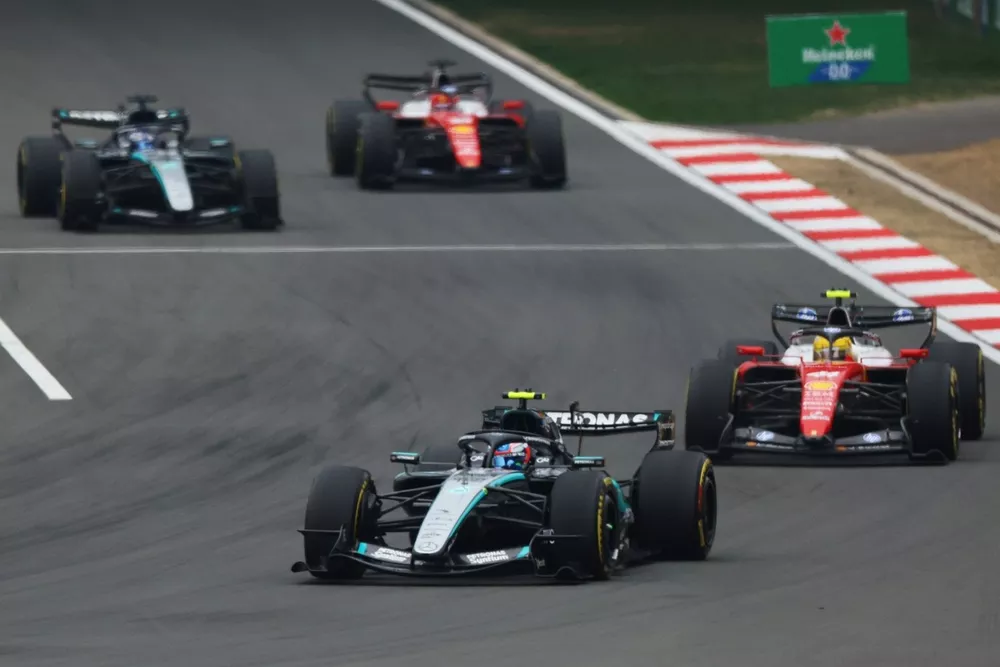
The Numbers Tell the Story
Ferrari entered the summer break after the Hungarian Grand Prix with 307 points.
McLaren had 222.
Red Bull had 180.
That meant Ferrari held an 85-point advantage over McLaren and a 127-point advantage over Red Bull.
Three races later, after the Netherlands, Italy and Spanish Grands Prix, Ferrari sits on 358 points.
McLaren has climbed to 306.
Red Bull has reached 230.
The result is striking.
Ferrari has scored 51 points since the summer break.
McLaren has scored 84.
Red Bull has scored 50.
That means McLaren has gained 33 points on Ferrari in only three races.
Ferrari’s advantage over McLaren has therefore fallen from 85 points to 52.
Red Bull, meanwhile, has not closed the gap in the same way. Ferrari’s lead over Red Bull has actually increased by one point, from 127 to 128.
But the McLaren trend is the warning Ferrari should be paying attention to.
The team that looked comfortably ahead of McLaren before the break is now watching the gap shrink rapidly.
The Development Race Is Exposing Ferrari
The biggest difference between Ferrari and McLaren right now may not be raw engineering ability.
It is how effectively each team is turning development work into performance.
Formula 1’s 2026 regulations have created an unusually aggressive development race. McLaren team principal Andrea Stella described the level of development as unprecedented, with teams constantly changing the competitive order through upgrades. :contentReference[oaicite:1]{index=1}
McLaren has shown exactly why that matters.
The team started the 2026 season on the back foot, but it has repeatedly introduced meaningful upgrades during the year.
Its Hungary package, including a revised floor and front wing, helped deliver a significant step and gave Lando Norris the opportunity to fight for victory. :contentReference[oaicite:2]{index=2}
McLaren continued bringing development after the summer break.
At Zandvoort, the team introduced a new rear-wing assembly, revised central bodywork and a new rear brake duct aimed at improving aerodynamic and cooling performance. :contentReference[oaicite:3]{index=3}
The results are now visible in the championship.
McLaren isn’t simply scoring points because Ferrari is making mistakes.
It is actively developing its way back into the fight.
Red Bull Is Developing Too — But Its Story Is Different
Red Bull’s situation is more complicated.
The team was behind Ferrari at the summer break and remains behind by a substantial margin.
But Red Bull has also been aggressive with development.
The team introduced a substantial upgrade package earlier in the season, including aerodynamic changes designed to address the limitations of its RB22.
Its development program has been particularly interesting because Red Bull entered the new regulations with its own power unit developed with Ford, creating another technical challenge on top of the chassis development race. :contentReference[oaicite:4]{index=4}
The FIA’s later engine-performance assessment also produced an unusual result: Red Bull’s power unit was judged to be the strongest internal-combustion engine, while Ferrari was among the manufacturers granted additional upgrade opportunities because its engine was more than 4% behind the benchmark. :contentReference[oaicite:5]{index=5}
So Red Bull isn’t disappearing.
It is learning.
And that is precisely what Ferrari needs to worry about.
Ferrari’s Development Has Become a Question of Efficiency
This is where Ferrari’s story becomes uncomfortable.
The Scuderia has not been sitting still.
Quite the opposite.
Ferrari brought an enormous number of upgrades during the first half of 2026, to the point that McLaren described Ferrari’s development volume as an inspiration for its own program. :contentReference[oaicite:6]{index=6}
Ferrari also introduced further floor, diffuser and aerodynamic changes after the summer break, while McLaren introduced its own major aerodynamic developments. :contentReference[oaicite:7]{index=7}
So the question isn’t:
“Why isn’t Ferrari developing?”
The better question is:
“Why isn’t Ferrari getting enough performance from all that development?”
That is a much more serious engineering problem.
A team can bring new parts to every race and still move backwards relative to its rivals.
Development isn’t measured by the number of components produced.
It is measured by lap time.
Ferrari May Have Spent Too Much Too Early
There was already a warning about this earlier in the season.
Mercedes team principal Toto Wolff suggested in June that Ferrari could eventually run into cost-cap limitations because of the aggressive rate at which it was developing the car. :contentReference[oaicite:8]{index=8}
That is the danger of an aggressive development strategy.
If Ferrari spends heavily to recover performance early, it may have fewer resources available later.
Meanwhile, rivals can learn from Ferrari’s upgrades, understand what works and what doesn’t, and continue developing their own cars.
The result can be a strange situation where the team that appeared to be the most aggressive early in the year becomes less competitive later.
And that is beginning to resemble what is happening now.
McLaren Is Doing What Ferrari Needs to Do
McLaren’s development strategy is particularly revealing.
The team has been willing to redirect its development program based on what the car actually needs rather than simply following the original plan.
Stella confirmed that McLaren changed its approach to upgrades during the season, with the team continuing to bring performance improvements even while balancing development work for the future. :contentReference[oaicite:9]{index=9}
That flexibility matters.
Formula 1 teams don’t know at the beginning of a season exactly which development direction will produce the most performance.
The best teams discover the weaknesses, change direction and react quickly.
Ferrari’s problem appears to be that it can produce plenty of development — but has struggled to turn that development into a sustained competitive advantage.
The Post-Summer Results Are a Warning
Look at what has happened since the break.
At the Dutch Grand Prix, Ferrari scored 31 points while McLaren scored 43.
At Monza, Ferrari managed only 8 points while McLaren took 22.
At the Spanish Grand Prix, Ferrari scored 12 points while McLaren added 19.
Across those three races:
Ferrari: 51 points
McLaren: 84 points
McLaren gained 33 points.
That is not yet a championship crisis.
A 52-point gap is still substantial.
But Formula 1 seasons can change quickly.
If McLaren continues gaining roughly 10 points per race, Ferrari’s advantage can disappear surprisingly quickly.
And that is why Ferrari cannot afford another development plateau.
Ferrari’s Bigger Problem Is Still Execution
Development alone does not explain everything.
Ferrari continues to struggle with execution.
Strategy remains one of the team’s biggest weaknesses.
The team can have a competitive car and still lose points because of the wrong tyre choice, a delayed pit stop or an overly conservative decision.
Those points become extremely valuable when a rival is catching you.
McLaren doesn’t need to beat Ferrari every weekend.
It simply needs to consistently finish close enough to keep reducing the gap.
Ferrari, meanwhile, needs to maximize every opportunity.
That means getting both cars into strong positions, avoiding reliability problems and making the correct strategic calls.
Mercedes Shows How Big Ferrari’s Real Problem Is
There is another uncomfortable number.
After the Spanish Grand Prix, Mercedes leads the constructors’ championship with 503 points.
Ferrari has 358.
That is a 145-point gap.
Ferrari is therefore not really fighting Mercedes for the championship anymore.
Its immediate concern is protecting second place.
And even that is becoming more interesting.
McLaren is now only 52 points behind.
Ferrari’s championship challenge has effectively become a battle to prevent the season from ending with the team losing momentum to both Mercedes and McLaren.
What This Means for Ferrari
Ferrari needs to change the way it thinks about development.
The objective cannot simply be to produce more upgrades.
It needs to produce the right upgrades.
That means better correlation between simulations and track performance, better understanding of tyre behaviour, more efficient use of the cost cap and faster reactions when a concept isn’t working.
The team also needs to avoid throwing development parts at the car simply because a rival has introduced something new.
Formula 1 rewards understanding, not activity.
McLaren’s recent progress demonstrates that.
Red Bull’s recovery efforts demonstrate it too.
Ferrari needs to understand why its rivals are gaining performance and then respond with solutions that actually work.
Lewis Hamilton Makes This Even More Important
Ferrari also has Lewis Hamilton.
That makes the current situation even more frustrating.
Hamilton is currently third in the drivers’ championship with 191 points, while Charles Leclerc is fifth with 167. Lando Norris is only five points behind Hamilton on 186, meaning McLaren’s development advantage is already visible in the drivers’ championship as well. :contentReference[oaicite:10]{index=10}
Hamilton doesn’t need Ferrari to give him a perfect car.
He needs a car that is consistently competitive and a team capable of maximizing the opportunities it gets.
Ferrari’s inability to maintain development momentum therefore affects not only the constructors’ championship but also Hamilton’s attempt to fight for victories and potentially another world championship.
What’s Next
The remaining races of the season will tell us whether Ferrari’s recent slide is temporary or structural.
The next key indicator will be the gap to McLaren.
If Ferrari starts extending its advantage again, the post-summer dip can be dismissed as a temporary swing in performance.
If McLaren continues taking points out of Ferrari, then the Scuderia has a much bigger problem.
The most important thing to watch isn’t simply how many upgrades Ferrari brings.
Watch whether those upgrades actually improve qualifying pace, race pace and tyre performance.
Watch whether McLaren continues finding performance.
Watch whether Red Bull can turn its technical progress into more consistent results.
And watch how Ferrari uses the rest of its development budget.
Because the championship standings are telling a very clear story.
Ferrari isn’t being caught because it suddenly became a bad team.
It is being threatened because its rivals are learning and developing faster.
And in modern Formula 1, standing still is effectively going backwards.
FAQ
Why is McLaren catching Ferrari in the 2026 F1 championship?
McLaren has outscored Ferrari 84-51 across the three races since the summer break, cutting Ferrari’s constructors’ advantage from 85 points after Hungary to 52 points after Spain. McLaren’s continued in-season development has helped it close the gap. :contentReference[oaicite:11]{index=11}
How many points did Ferrari have before the 2026 summer break?
After the Hungarian Grand Prix, Ferrari had 307 points, compared with 222 for McLaren and 180 for Red Bull. Ferrari therefore led McLaren by 85 points and Red Bull by 127 points.
How many points has Ferrari scored since the summer break?
Ferrari has scored 51 points across the Netherlands, Italy and Spanish Grands Prix since the summer break. McLaren has scored 84 and Red Bull 50 over the same period.
Is Red Bull catching Ferrari?
Not yet. Ferrari’s advantage over Red Bull was 127 points after Hungary and is 128 points after Spain. Red Bull has therefore not reduced Ferrari’s lead despite its development efforts.
Is Ferrari going backwards in F1?
Ferrari has not necessarily lost absolute performance, but its relative position has weakened. McLaren has developed strongly after the summer break, and Ferrari’s 51 points compared with McLaren’s 84 over the last three races shows that Ferrari is losing ground.
Why is McLaren developing better than Ferrari?
McLaren has demonstrated an ability to redirect its development program based on what the car needs and has continued bringing meaningful upgrades throughout the season. Ferrari has also produced a large volume of upgrades, but the key question is how efficiently those upgrades are translating into track performance.
Can Ferrari still finish second in the constructors’ championship?
Yes. Ferrari currently has 358 points compared with McLaren’s 306, giving Ferrari a 52-point advantage with races remaining. But McLaren’s recent momentum means Ferrari cannot afford to assume second place is secure. :contentReference[oaicite:12]{index=12}
What is Ferrari’s biggest problem in 2026?
It is not one single problem. Ferrari’s biggest weakness is the combination of development efficiency, race execution, strategy and its inability to consistently convert upgrades and competitive pace into maximum points.