Apple has finally built the foldable iPhone.
Now comes the harder part: convincing Americans that they actually need one.
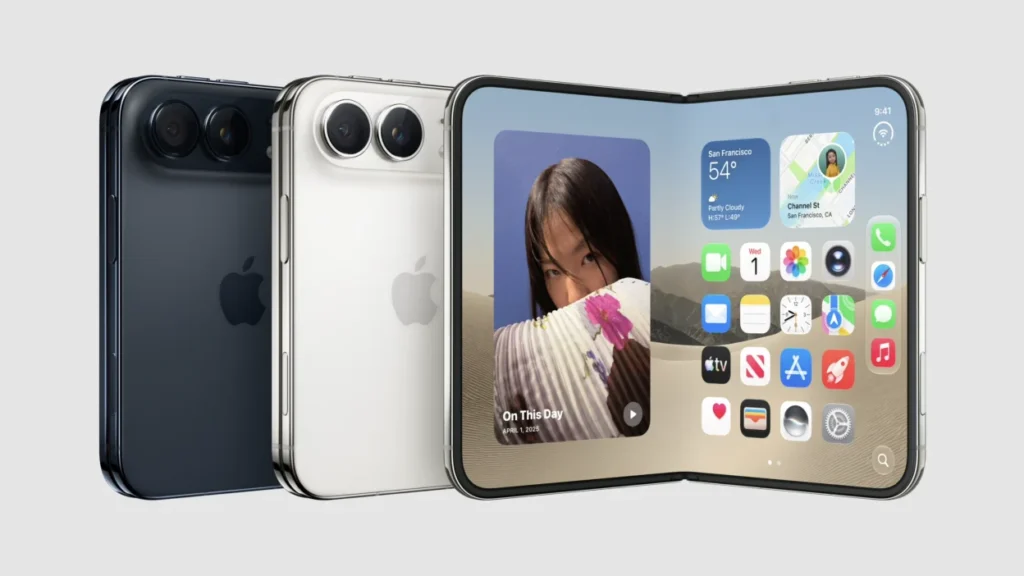
The iPhone Duo starts at $1,999 in the U.S., making it one of Apple’s most expensive mainstream smartphones ever. It opens into a 7.6-inch display and runs iOS 27.1, giving users something closer to a small tablet without carrying a separate device.
Apple clearly believes there is a market for it.
But the numbers tell a more complicated story.
Foldable phones remain a tiny part of the U.S. smartphone market. Research from Recon Analytics found that foldables accounted for just 1.13% of smartphones in use in the U.S. during the 12 months ending August 2026, almost exactly the same as the 1.14% recorded in the previous 12-month period.
In other words, despite years of Samsung Galaxy Z Folds, Galaxy Z Flips, Motorola Razrs and Google Pixel Folds, the share of Americans actually using foldable phones has barely moved.
And that is the real challenge facing Apple.
Can the iPhone Duo finally make Americans want a foldable — or is Apple simply entering a category that consumers have already decided they don’t need?
The Foldable Market Is Much Smaller Than the Smartphone Market
The first thing to understand is scale.
The global smartphone industry sells more than 1 billion phones a year.
Foldables are measured in tens of millions.
IDC expects around 22.9 million foldable smartphones to ship globally in 2026, while other research firms have forecasts ranging from roughly 20 million to more than 22 million units depending on methodology.
Even at the higher end, that is still only a small fraction of the global smartphone market.
IDC expects the overall smartphone market to ship around 1 billion units in 2026, while foldables are forecast to grow despite the broader smartphone downturn.
That makes foldables an interesting contradiction.
The overall smartphone market is shrinking.
The foldable segment is still trying to grow.
But growth does not necessarily mean mass adoption.
The U.S. Story Is Even More Interesting
The U.S. is one of the world’s most important premium smartphone markets.
Apple dominates the American smartphone market, with Counterpoint reporting that Apple accounted for 57% of U.S. smartphone shipments in Q1 2025, compared with 25% for Samsung and 11% for Motorola.
That makes Apple’s decision to enter foldables particularly important.
Apple isn’t entering a market where it is a small player.
It is bringing its enormous existing iPhone customer base into a category that has struggled to expand beyond early adopters.
That gives the iPhone Duo an advantage Samsung never had:
millions of potential buyers already use the operating system.
The question is whether those users actually want their next iPhone to fold.
American Consumers Have Not Exactly Been Begging for Foldables
This is where the sentiment data becomes uncomfortable for Apple.
A CNET/YouGov survey of 2,605 U.S. adults conducted in August found that 75% said they were not interested in buying a foldable iPhone.
Among those who expressed interest, the average amount respondents said they would spend was approximately $781.
That’s dramatically below Apple’s $1,999 starting price.
The survey also showed that resistance wasn’t limited to older consumers.
Around:
- 83% of Boomers said they weren’t interested
- 77% of Gen X
- 69% of Gen Z
- 68% of Millennials
said they would pass on a foldable iPhone.
That doesn’t mean 75% of Americans will never buy a foldable.
It does show something important:
The category has not yet created mass-market desire.
But There Is Another Side to the Story
Recon Analytics’ much larger consumer dataset tells a more nuanced story.
The company tracks smartphone behavior among thousands of U.S. subscribers every week and has data covering more than 700,000 U.S. consumers at the model level.
Its research found that 15.1% of iPhone owners selected switching from a traditional flat-screen phone to a foldable as one of their top three desired features for their next phone.
Among iPhone owners aged 18–29, that number increased to 21.9%.
That is considerably more encouraging for Apple.
It suggests the problem isn’t that Americans categorically dislike foldables.
The problem may be that most consumers don’t see enough benefit to justify changing phones.
And that is a very different problem.
What Do Americans Actually Want From Their Next Phone?
Recon’s survey provides another important clue.
Among iPhone owners:
54.4% selected longer battery life as one of their top three desired features.
39.3% wanted a better camera.
Only 15.1% selected switching from a flat screen to a foldable.
And 17.2% selected new AI features.
That tells Apple something important.
Consumers aren’t necessarily asking:
“Can my phone fold?”
They’re asking:
“What will this phone actually do better?”
This may be the biggest challenge for the iPhone Duo.
A foldable screen is visually impressive.
But consumers need to understand why that extra screen changes their daily life.
The Foldable Market Hasn’t Exactly Taken Off
Foldable phones first arrived in meaningful commercial form around 2019.
Samsung has spent years refining the Galaxy Fold and Flip families.
Google has entered with Pixel Fold devices.
Motorola has aggressively pushed the Razr.
Yet U.S. adoption has remained extremely low.
Recon’s data is particularly revealing.
Foldables represented:
1.14% of smartphones in use in the 12 months before August 2026.
Then:
1.13% in the following 12 months.
That is effectively flat.
And this happened despite multiple generations of foldables from the industry’s biggest manufacturers.
That suggests the category’s biggest problem isn’t awareness.
Americans know foldables exist.
They simply haven’t decided they need one.
But There Is a Twist: The Market Is Changing
The U.S. foldable market is not completely stagnant.
The shape of the market is changing.
And Motorola is a major reason why.
According to IDC analysts, Motorola had captured roughly 50% of the U.S. foldable market by early 2026, largely through its Razr lineup.
That is remarkable because Samsung was effectively synonymous with foldables for years.
Motorola’s strategy was different.
Instead of focusing almost entirely on $1,800–$2,000-plus book-style devices, Motorola pushed the Razr toward a much broader consumer audience through lower prices and carrier promotions.
The lesson is important:
Americans appear more willing to experiment with a foldable when the financial risk is lower.
That may explain why the traditional clamshell Razr has been able to find customers while expensive book-style foldables remain niche.
Samsung Is Still the Global Foldable Giant
Globally, Samsung remains the established foldable leader.
Counterpoint estimates that Samsung held around 40% of the global foldable market in 2025.
Samsung has also spent more than seven years developing foldables.
That experience matters.
The company has learned how to make hinges thinner, displays more durable and software more useful across two screens.
But Samsung’s own U.S. experience shows the challenge.
Counterpoint’s U.S. sell-through data shows the Galaxy Z Fold 5 sold 48.7% fewer units than the Fold 4 during their respective first five months.
The Fold 6 then declined another 12.4% against the Fold 5.
The Fold 7 reversed that trend, selling 36.6% more units than the Fold 6 over the equivalent first five months.
That suggests consumers are responding to better hardware.
But it doesn’t prove that foldables have crossed into the mainstream.
Instead, it looks more like the market is responding when the products become thinner, lighter and easier to live with.
The Revenue Story Is Different From the Unit Story
This is where foldables become strategically important for Apple.
Foldables don’t need to sell as many units as traditional smartphones to generate significant revenue.
The prices are dramatically higher.
A $1,999 iPhone Duo generates more revenue per device than a conventional $799 or $999 smartphone.
Omdia has highlighted this premiumization effect in the foldable market: while foldables represent a small share of smartphone shipments, they contribute disproportionately to the value of premium smartphone portfolios.
This is why Apple may not need the iPhone Duo to become the next iPhone 17.
It doesn’t need tens of millions of Americans to immediately switch.
It needs a relatively small group of high-income customers willing to pay premium prices.
And Apple already has that audience.
Who Actually Buys Foldables?
Recon’s data reveals a fascinating split.
Book-style foldable users are significantly more affluent than the average smartphone owner.
For example, 28% of Galaxy Z Fold7 owners in Recon’s dataset came from households earning at least $100,000.
The national smartphone average was around 18.5%.
Pixel Fold users were even more male-skewed.
Motorola Razr users looked very different.
Razr owners were much closer to the overall smartphone population and were significantly more likely to come from lower-income households.
That creates two separate foldable markets.
Market One: The Lifestyle Foldable
Smaller, cheaper, fashion-oriented devices such as Razr.
Market Two: The Productivity Foldable
Large book-style devices such as Galaxy Z Fold, Pixel Fold and now iPhone Duo.
Apple has chosen Market Two.
That is both its opportunity and its risk.
The iPhone Duo Is Entering the Narrowest Part of the Market
This is perhaps the most important insight from the data.
Apple isn’t launching a cheap foldable.
It isn’t launching a $999 Razr-style device.
It is launching a $1,999 book-style premium phone.
Recon estimates that only 1.8% of surveyed iPhone owners who stated a phone budget were willing to spend $1,800 or more.
Meanwhile, 45.5% said they expected to spend less than $600.
That doesn’t mean only 1.8% could theoretically buy an iPhone Duo.
It means the device’s natural target audience is relatively small.
Apple therefore needs carrier promotions and trade-ins to change the effective price.
And that is exactly where the U.S. market becomes interesting.
The Carrier Question Could Decide Everything
Americans don’t always pay the advertised price for an iPhone.
Carrier promotions can turn a $1,999 phone into a much more manageable monthly payment when combined with trade-in credits.
Apple itself offers financing for the Duo starting at $83.29 per month over 24 months, while its Apple Upgrade leasing program advertises eligible plans starting at $57.99 per month over 24 months.
That changes the psychological calculation.
Consumers don’t necessarily think:
“I’m spending $1,999.”
They may think:
“I’m paying around $58–$83 a month.”
That could materially expand the potential audience.
Apple’s Biggest Advantage Isn’t the Screen
It is the ecosystem.
Someone who already owns:
- an iPhone
- Apple Watch
- AirPods
- Mac
- iCloud storage
- Apple subscriptions
doesn’t need to learn a new platform.
They simply move to a different iPhone.
That’s a huge advantage.
Samsung spent years convincing people to move from traditional phones to Android foldables.
Apple only needs existing iPhone customers to move from one iPhone shape to another.
That is a much easier behavioral change.
So Could the iPhone Duo Be a Flop?
The answer depends on what “flop” means.
If the expectation is that Apple turns foldables into a mass-market replacement for traditional iPhones immediately, the existing data provides little evidence for that.
The U.S. foldable installed base remains around 1% of smartphones, and consumer surveys show limited willingness to pay Apple’s $1,999 price.
But if Apple sells several million high-margin devices to affluent iPhone owners, that could still be commercially meaningful.
Counterpoint estimates Apple could sell approximately 6 million iPhone Duo units by the end of 2026, giving it around 25% of the global foldable market in its first year.
TrendForce is slightly more conservative, estimating around 5 million units and approximately 24.8% market share for 2026.
Those forecasts aren’t guarantees.
They are estimates made before Apple has a complete selling history for the product.
But they demonstrate how dramatically analysts expect Apple’s entry to change the category.
Where Could Apple Rank?
If the approximately 5–6 million unit forecasts are accurate, Apple could immediately become one of the world’s largest foldable vendors.
That is extraordinary for a company entering the category for the first time.
But there is an important distinction.
Global leadership and U.S. leadership are different questions.
Globally, Samsung enters 2026 with a huge installed advantage.
In the U.S., Motorola has recently emerged as a major foldable leader by unit share, while Samsung remains particularly important in the premium book-style segment.
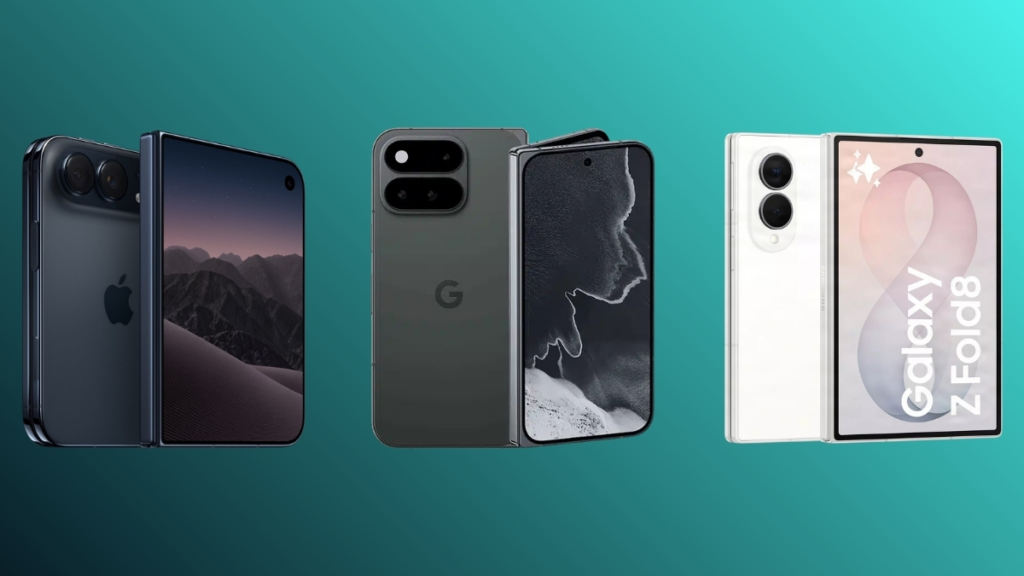
Apple’s Duo competes most directly with Samsung’s Galaxy Z Fold family and Google’s Pixel Fold — not necessarily with every Razr buyer.
That means Apple could become the biggest premium book-style competitor without immediately dominating all foldables.
What Happens to Traditional Smartphones?
This is perhaps the biggest question of all.
Will people eventually stop buying traditional slab phones?
The current data does not support that conclusion.
Traditional smartphones still account for the overwhelming majority of global and U.S. sales.
And the U.S. market remains heavily dominated by conventional iPhones and Galaxy devices.
Foldables therefore look more like a new premium category than a replacement category.
At least for now.
The real test will come if foldable prices fall.
If manufacturers eventually produce reliable foldables around $800–$1,000, adoption could look very different.
At $1,999, the product remains an enthusiast and premium device.
At $899, it becomes a mainstream alternative.
That price transition could determine the industry’s future.
The Bigger Question: Is the Foldable Market Growing or Stalling?
The answer is complicated.
Globally, forecasts still point to growth in 2026.
IDC forecasts foldables growing 12.6% to 22.9 million units.
Counterpoint has forecast roughly 21% growth.
But TrendForce expects approximately 20.2 million units, only 0.5% higher than 2025.
The forecasts differ because researchers use different definitions, shipment periods and assumptions about Apple’s launch.
So it would be wrong to say:
“Foldables are exploding.”
It would also be wrong to say:
“Foldables are dying.”
The more accurate description is:
Foldables remain a tiny category, but Apple’s arrival is expected to prevent the segment from stagnating further and could accelerate premium foldable adoption.
That is a much more interesting story.
What the iPhone Duo Could Change
Apple’s biggest potential contribution may not be its own sales.
It may be consumer awareness.
If millions of Americans see friends, colleagues and celebrities using an iPhone that opens into a larger screen, the product category itself becomes more familiar.
That could help Samsung.
It could help Google.
It could help Motorola.
It could also create a new replacement cycle.
Apple did something similar in other categories.
It entered tablets after tablets already existed.
It entered smartwatches after smartwatches already existed.
It entered wireless earbuds after wireless earbuds already existed.
The important question is whether Apple can repeat that pattern with foldables.
Three Possible Futures for the iPhone Duo
Scenario 1: The Premium Niche
The Duo attracts affluent Apple fans but remains a relatively small product line.
Foldables continue representing around 1–3% of smartphones.
Apple makes significant revenue from the category without fundamentally changing the smartphone market.
Scenario 2: The Category Breakthrough
Apple’s ecosystem and marketing convince millions of iPhone users to try foldables.
Competitors respond with thinner and cheaper devices.
Foldables move toward 5% or more of premium smartphone sales.
The category becomes a major battleground.
Scenario 3: The Price Barrier Wins
Consumers love the technology but reject the economics.
Carrier promotions soften the $1,999 price, but most buyers continue choosing conventional iPhones for $799–$1,199.
Foldables remain an enthusiast category.
The important point is that the first year’s sales alone may not tell the whole story.
Apple’s real impact could be measured by what happens to the entire category after the Duo arrives.
What’s Next?
The iPhone Duo launches in the U.S. on October 23, 2026, with pre-orders beginning October 16.
The first few months will provide the data that analysts currently don’t have:
- Actual U.S. sell-through
- Trade-in rates
- Carrier subsidy levels
- Return rates
- Upgrade rates
- Customer satisfaction
- Repeat purchase intent
- How many existing iPhone owners switch
- How many Android users move to Apple
- Whether conventional iPhone sales are cannibalized
Those numbers will determine whether Apple’s foldable experiment is a niche luxury product or the beginning of a much larger shift.
For now, the evidence points to a fascinating contradiction.
Americans don’t appear to be demanding foldables.
But a meaningful minority is interested.
The existing foldable market has struggled to move beyond roughly 1% of U.S. smartphone usage.
Yet Apple believes enough iPhone users will pay $1,999 to make the category commercially important.
That makes the iPhone Duo more than another iPhone launch.
It is Apple’s biggest test yet of whether the smartphone’s next form factor is actually a foldable screen — or whether Americans still prefer the phone they’ve been buying for the last decade.
FAQ
How big is the foldable phone market in the U.S.?
Recon Analytics found that foldables represented 1.13% of smartphones in use in the U.S. during the 12 months ending August 2026.
How much does the iPhone Duo cost?
The iPhone Duo starts at $1,999 in the U.S. for 256GB and goes up to $3,199 for 2TB.
How many iPhone Duo units could Apple sell in 2026?
Counterpoint estimates approximately 6 million units, while TrendForce forecasts approximately 5 million.
Is Samsung still the global foldable leader?
Yes. Counterpoint estimated Samsung held approximately 40% of the global foldable smartphone market in 2025.
Who currently leads the U.S. foldable market?
IDC analysts said Motorola held roughly 50% of the U.S. foldable market in early 2026, driven primarily by its Razr lineup. Samsung remains a major player, particularly in premium book-style foldables.
Do Americans actually want foldable phones?
Interest exists but remains limited. A CNET/YouGov survey of 2,605 U.S. adults found 75% were not interested in buying a foldable iPhone. Recon Analytics found a more nuanced result: 15.1% of iPhone owners selected switching to a foldable among their top three desired next-phone features.
Are foldables replacing traditional smartphones?
Not yet. Foldables remain a very small percentage of smartphone sales, while conventional smartphones continue to account for the overwhelming majority of the market.
Could Apple make foldables mainstream?
Apple’s entry could significantly increase awareness and premium demand, but whether it changes mass-market adoption will depend heavily on price, carrier promotions, software and whether consumers see a compelling advantage over traditional smartphones.
Related reading:
- iPhone Duo vs Galaxy Z Fold8 vs Pixel 11 Pro Fold: The 2026 Foldable Showdown
- iOS 27 vs Android 17: Which Smartphone Software Is Actually Better?
- Why Apple’s $1,999 iPhone Duo Could Change the Smartphone Market
- Traditional iPhone vs Foldable iPhone: Which Phone Will Americans Choose?