The UK government is moving toward taking control of Speciality Steel UK, a troubled steelmaker whose operations support more than 1,300 jobs across South Yorkshire and the West Midlands. The decision makes the company one of Britain’s most closely watched business stories and signals a much bigger question for the UK economy: how far should the government go to protect strategically important industries and jobs?
Why It Matters
Steel is not just another manufacturing industry.
It sits underneath some of Britain’s most strategically important sectors, including automotive manufacturing, aerospace and defence.
That is why the government’s decision to move toward acquiring Speciality Steel UK is attracting attention far beyond the company’s employees.
The move comes as Britain tries to rebuild domestic industrial capacity while dealing with higher energy costs, international competition and concerns about the resilience of critical supply chains.
It also represents a significant shift in the government’s role in the economy.
Instead of allowing a troubled industrial company to disappear or relying entirely on a private-sector buyer, the government has decided that keeping the steelmaking capacity operational is important enough to justify state intervention.
The Details
Speciality Steel UK, formerly part of Sanjeev Gupta’s Liberty Steel group, has been in administration/liquidation after years of financial difficulties.
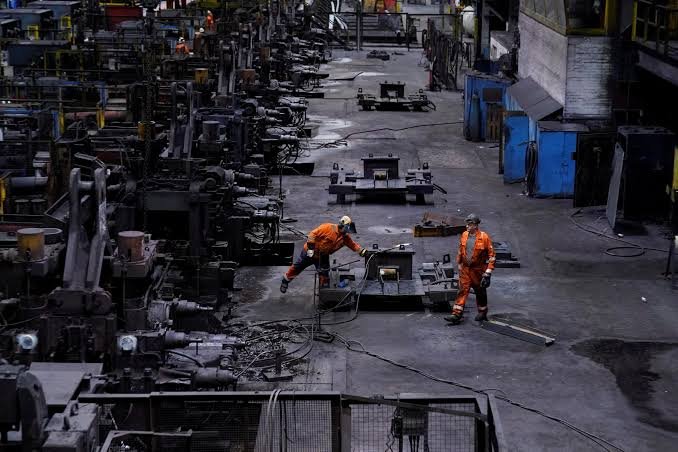
The business operates sites in Rotherham, Stocksbridge, Brinsworth and Wednesbury and supports more than 1,300 jobs.
The UK government announced that it would work toward acquiring the company after ministers concluded that a proposed sale to Norwegian green-steel startup Blastr Green Steel could not provide sufficient long-term stability, certainty and value for money.
Business Secretary Jonathan Reynolds said the decision was not ideological but was driven by the importance of maintaining the country’s steelmaking capabilities.
That distinction matters.
The government is not simply trying to protect a company from failure.
It is arguing that certain industrial capabilities are strategically important enough that losing them would create a much bigger economic and national-security problem.
Why Steel Matters to Britain
Steel is a foundational material for modern industry.
It is required for cars, machinery, construction, infrastructure, energy projects and defence equipment.
If Britain loses the ability to produce certain specialist steel products domestically, companies can become more dependent on international suppliers.
That creates vulnerabilities during geopolitical crises or global supply disruptions.
The Speciality Steel case therefore fits into a much broader debate about economic resilience.
The pandemic demonstrated how quickly international supply chains can break down.
The war in Europe and wider geopolitical tensions have reinforced concerns about dependence on foreign suppliers.
And rising competition from China and other major manufacturing economies has increased pressure on Western countries to protect critical industrial capabilities.
A Major Test for UK Industrial Policy
The decision also raises an uncomfortable question for British policymakers.
How much should the government spend protecting industries that private investors are unwilling or unable to rescue?
Supporters argue that the economic cost of losing strategic manufacturing capacity can be much greater than the cost of intervention.
If a steel plant closes permanently, restarting production years later can be extremely difficult.
The UK could lose skilled workers, specialist equipment and industrial expertise that took decades to develop.
Critics, however, can argue that governments risk becoming responsible for businesses that cannot compete commercially.
That creates a difficult balance.
The government needs to determine which industries are genuinely strategic and which businesses should be allowed to fail.
The Jobs Question
Employment is another major reason the story matters.
More than 1,300 jobs are connected to Speciality Steel UK’s sites.
But the economic impact extends beyond those direct employees.
Steel plants support contractors, transport companies, suppliers, local businesses and communities.
That means the closure of a major industrial facility can have a multiplier effect on regional economies.
South Yorkshire and the West Midlands have long industrial histories, and maintaining high-value manufacturing jobs is an important part of regional economic policy.
The government therefore has to consider both the immediate employment impact and the long-term industrial benefits.
The UK Economy Is Already Under Pressure
The steel decision comes at a difficult time for Britain’s broader business environment.
The UK labour market has weakened, with payroll employment falling and vacancies remaining at their lowest level outside the pandemic period for more than a decade. Wage growth has also slowed, while rising energy prices are creating another source of pressure for businesses.
That makes the steel intervention particularly significant.
Manufacturing companies are already dealing with high operating costs, energy prices and uncertainty about future demand.
At the same time, the government is under pressure to support domestic industry without creating an unsustainable burden on taxpayers.
What This Means for British Business
The Speciality Steel decision could become a precedent for how Britain handles other strategically important companies in financial difficulty.
If the government successfully stabilises the business and protects production, other industries could argue that they too deserve state support when facing similar strategic risks.
That could encourage more active industrial policy.
It could also influence future investment decisions.
International investors may view government intervention as a positive signal that Britain is serious about maintaining strategic manufacturing.
Others may see it as evidence that the UK is becoming more interventionist.
Either way, the decision sends a clear message:
Britain is increasingly willing to treat some industrial capacity as a national asset rather than simply a private business.
What’s Next
The next major question is how the government structures the acquisition and whether it can make Speciality Steel UK commercially sustainable over the long term.
Buying the company is only the beginning.
The government will still need to deal with energy costs, investment requirements, international competition and the future demand for specialist steel.
If the company becomes financially viable again, the intervention could be presented as a successful example of strategic industrial policy.
If costs continue to rise and the business requires years of government support, critics will question whether taxpayers should have taken on the risk.
That makes Speciality Steel UK a much bigger story than one steelmaker.
It is becoming a test of what Britain’s industrial future should look like.
FAQ
Why is the UK government taking control of Speciality Steel UK?
The government decided that maintaining the company’s strategic steelmaking capabilities was important after concluding that a proposed private-sector takeover did not provide sufficient long-term certainty.
How many jobs are connected to Speciality Steel UK?
The company supports more than 1,300 jobs across sites in South Yorkshire and the West Midlands.
Why is steel strategically important to Britain?
Specialist steel is used in sectors including automotive, aerospace and defence. Maintaining domestic production can reduce dependence on overseas suppliers and strengthen supply-chain resilience.
Does this mean the UK is nationalising more businesses?
The government has framed the decision as a strategic intervention rather than a broad ideological shift toward state ownership. Whether it becomes a wider model for other troubled strategic industries remains to be seen.
Why is this story important for UK investors and businesses?
The acquisition could signal a stronger role for government in protecting strategic industries, potentially affecting future investment, industrial policy and the treatment of companies considered critical to Britain’s economic security.
Written by [Author Name], Business & Economy Correspondent.
Related reading:
- Why Britain’s Jobs Market Is Suddenly Getting Worse
- UK Interest Rates: What Businesses Need to Know in 2026
- Britain’s Manufacturing Problem: Can the UK Compete With China?
- Why Energy Prices Are Becoming Britain’s Biggest Business Risk